Welcome to Mile Markers, a twice-a-month newsletter about rural higher education.
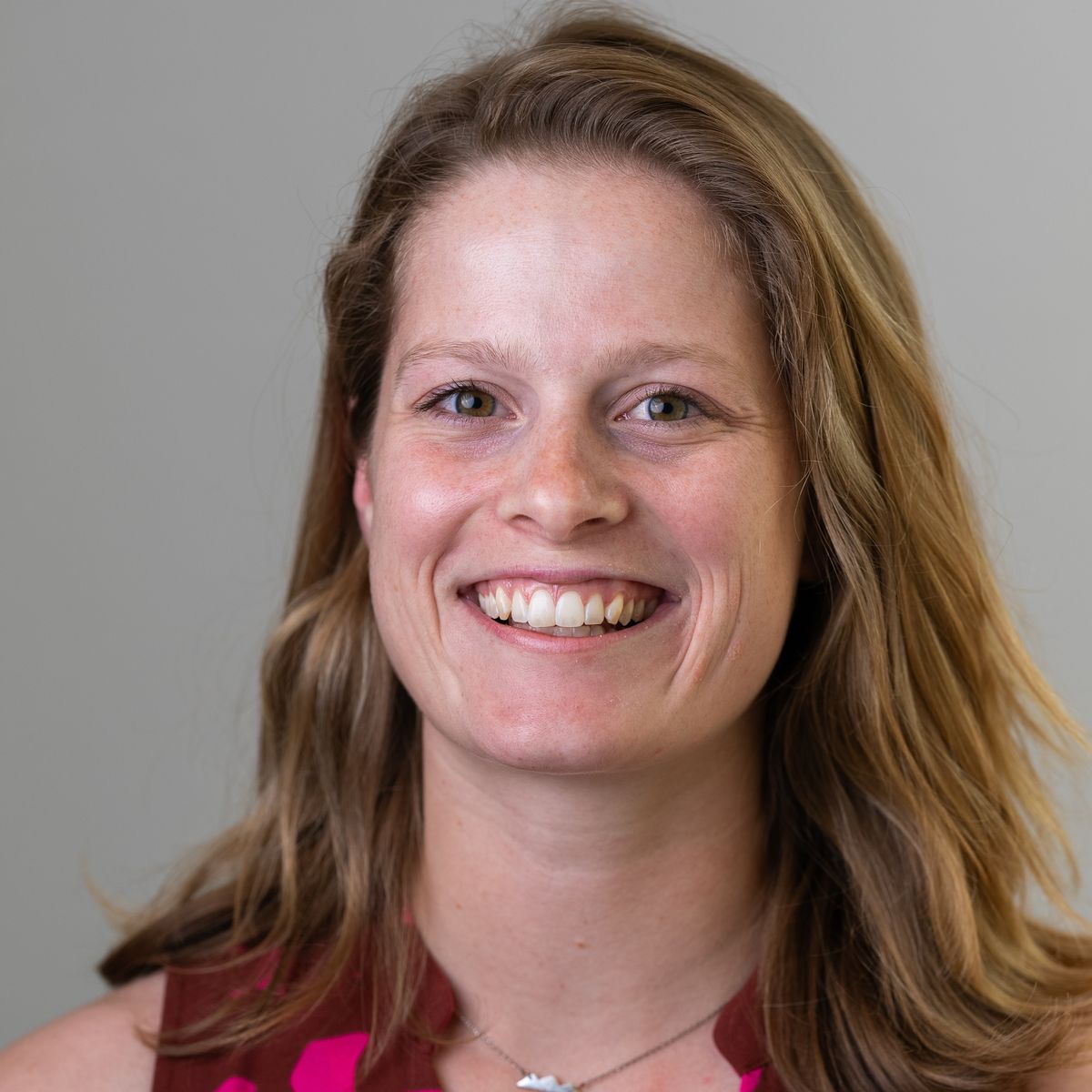
I’m coming to you after my yearly sibling trip, this time to Nova Scotia, where I had one of the coolest experiences: bioluminescent sea kayaking. Can you feel my enthusiasm in this photo?? Hope your summers are also full of adventures or relaxation time with people you love.

The author of this newsletter on a recent adventure in Nova Scotia.
In this edition, I will share about a 10-year-old program in Virginia that is similar — yet different — to Workforce Pell. One that community college leaders in the commonwealth told me they’d rather focus on than this expanded federal grant that has especially rural community colleges raising eyebrows about its immediate effectiveness.
But before that, I have a request: Will you try something with me? In our initial audience survey, some of you mentioned that you’d appreciate having a discussion board-like space where you can connect with one another.
Beehiiv (the platform where we send this newsletter) just launched a new product that may help us put all of this in one place. You can check it out here. It’s free: all you have to do is plug in your email, verify, and you’ll have access.
I put the question from last week’s newsletter there if you’d like to share about a college or university that serves its rural community in a meaningful way. Now, all you have to do is comment, and you can even add photos if you wish!

Check it out and let me know what you think!
For many rural learners, they need a few essential things to access job training: funding to pay for the program, reliable transportation, proximity to the college and an assurance that this will be worth their time and money. Specifically, will this credential actually lead to a higher-paying role?
Keith Harkins, vice president of academic and workforce programs at Southside Virginia Community College, said Virginia’s FastForward program is checking those boxes.
“It’s a massive economic development game changer for our rural communities,” Harkins said.
FastForward, which is the Virginia Community College System’s name for the statewide program born from a bill passed in 2016, helps residents access short-term training for high-demand jobs in the state. The student pays for one third of the cost of the program — usually a training somewhere between 6 and 12 weeks that works toward an industry-recognized credential — and then the state pays the rest.
The state releases the next portion of that grant when the student completes the training, and the final amount when the student earns the certificate or license.

Community colleges across Virginia offer these short-term training programs for earning industry-recognized credentials. This screenshot shows the service areas of those colleges.
Until FastForward came about, Harkins said there was no real financial support for short-term programs. Community colleges like Southside had to stretch nurse aide programs, for example, to fit into a semester. Once they converted it to a non-credit program, Harkins said they saw five times as many graduates.
Randy Stamper, associate vice chancellor for career education and workforce programs with Virginia’s Community Colleges, said that this model has been especially helpful for rural students. Nearly 40% of all FastForward students are enrolled at one of Virginia’s 14 rural colleges, according to Stamper.
Some community colleges like Brightpoint and Reynolds, which serve rural students but are located near Richmond, see even more opportunities to connect these students with FastForward. Elizabeth Creamer, who is the vice president of workforce development for the division serving both those colleges, said they have a mobile lab, but they need to find ways to get rural students to the campus where they can access things that can’t fit on a truck — like heavy equipment simulators or pharmaceutical manufacturing equipment.
FastForward also reports an average $14,869 increase in wages after completing one of these programs that are often more affordable for students. Still, Creamer said it’s often the full-time benefits that come with these jobs, including sick leave, that makes the biggest difference for FastForward graduates.

This chart from Virginia’s Community Colleges’ 2026 fact sheet on FastForward shows the average increase in wages by industry. Courtesy of Virginia’s Community Colleges.
Students can use other scholarships to pay for their portion of the program, and community colleges like Southside have built industry relationships that often step in to cover that first third, especially for students pursuing high-demand jobs like powerline work.
“Every single one of the electric cooperatives, just about, in Virginia has said, ‘If you get a student from our area, let us know. We’ll pay the first third,’” Harkins said.

Powerline training is one of the largest FastForward programs that Southside Virginia Community College offers. Courtesy of Southside Virginia Community College.
At Brightpoint and Reynolds, Creamer said they have more recently seen increased funding and support for their FastForward programs from businesses. Sometimes that’s in-kind support, such as job coaching and internship opportunities from the local medical center VCU Health.
One of the biggest challenges Virginia faces with FastForward is tracking when students complete their credential — a requirement for community colleges to receive that final payment. While 94% of students complete their courses, the average credential completion rate is 72%. In some cases, Stamper said students may not be taking the related exam, especially if they get offered a job before completing it. But this gap can also be attributed to the difficulty of tracking and communicating with the third parties that offer the exams.
Putting this into Workforce Pell context
FastForward is similar to Workforce Pell in that it is focused on accelerated training to help people earn a valuable credential for a high-demand and high-paying job. One area where it differs, Stamper said, is the length requirement.
Eligible Workforce Pell programs must run at least 150 hours and last at least 8 weeks, but FastForward eligible programs are often shorter.
Even though many of the FastForward programs would likely meet the Workforce Pell requirements for completion and job placement, Stamper said these length requirements mean Virginia will be slow to adjust their programs to fit Workforce Pell.
“If you can enroll in a program, and in four weeks and 80 hours of instruction be successful in earning a commercial driver's license,” he said, “we are very reluctant to expand that to 150 hours and 8 or 9 weeks simply to access Workforce Pell because that is a burden on the student that is unnecessary.”
He also mentioned the paperwork burden: Many students applying for a non-credit short-term program do not fill out FAFSA, something that is required for Workforce Pell eligibility.
That doesn’t mean Virginia is going to ignore Workforce Pell, completely either, though.
“Do I see it ever replacing FastForward? No, and I don’t see it as being bigger than FastForward in Virginia,” Creamer said. “But I think it could be an additional tool for some programs that meet all of the criteria.”
The Commonwealth of Virginia has clearly noted the benefit of FastForward, too, increasing funding from $4 million to $40 million over the past decade. This is increased funding that community college leaders like Harkins want to see continue no matter what happens with Workforce Pell.
“I think this is the model,” Harkins said.
Workforce Pell is here. What does it mean for you? Sign up for our free, six-part briefing to learn more about how to take advantage of this new opportunity.
A neat tool to explore
Speaking of knowing the value of your education: the new Certificate Earnings Explorer tool, which Open Campus built in partnership with The HEA Group, allows users to explore and compare the economic outcomes of thousands of undergraduate certificate programs.
I’m excited to dig into this tool more, and if you check it out and see any rural trends worth noting, please let me know!
What I’m reading
When reporter Jason Gonzales told me he wanted to report on the mostly all-girls rodeo team at Colorado Mesa, I was so excited to read it. And his piece did not disappoint, sharing how this reflects a wider challenge of attracting rural men to four-year universities nationwide.
Indiana University Bloomington’s Center for Rural Engagement is doing some cool things, and I enjoyed reading about this oral storytelling partnership with the Indiana Landmarks Black Heritage Preservation Program. I’m looking forward to seeing the interactive story map they will build.
This feature in Community College Daily focuses on how some community colleges in North Carolina have helped small businesses recover after Hurricane Helene. I thought it was an excellent example of rural community colleges serving as a bridge between their community’s small businesses and vital resources, especially during emergencies.
As always, send me an email if you want to chat more about rural higher education or collaborate in some way. Oh, and don’t forget to check out the new community space we’re trying out. You can always share thoughts on today’s newsletter there, too!
Thanks for reading and loving rural.
Talk soon,
Emily
P.S. Since I’m working from my family’s farm in Pennsylvania this week, here’s a bonus photo of a little growing pumpkin. Hope everyone enjoys the rest of July!

To sponsor a future newsletter, please email [email protected]. Support our work with a donation to Open Campus. You can also help by sharing this newsletter with your friends. They can sign up for their own copy here.
